Nursery bedding guide
A Nursery Bedding Checklist: Fit, Fiber, and Care
A baby’s sleep space should be planned around safety and practicality first. Before choosing a nursery sheet for its color or softness, check that it fits the mattress, understand what it is made from, and make sure its care instructions work for your household. A few careful checks can turn a pretty purchase into a more confident everyday choice.
Published October 21, 2026
Shopping for nursery bedding can feel like a small decision with an outsized number of details. There are colors to coordinate, fibers to compare, labels to interpret, and laundry instructions to imagine fitting into an already busy week. But the most important question is not whether a sheet looks soft in a product photo. It is whether the sheet is designed for the specific crib mattress, stays securely fitted, and can be cleaned as directed.
This checklist takes a practical approach to nursery bedding: fit, fiber, and care. It uses the Naturepedic organic sateen crib sheet as one example of a fitted crib sheet, not as a substitute for checking your own mattress measurements or following current safe-sleep guidance. The goal is to help families know what to verify before making a choice—and what details deserve a second look.
For a baby’s sleep area, keep the setup simple. Follow the safe-sleep recommendations of your local public health authority and the instructions supplied with the crib and mattress. Bedding is only one part of a safe sleep environment, and a fabric’s softness, natural origin, or certification does not replace those recommendations.
1. Start with the mattress, not the color
A fitted sheet is meant to fit a particular mattress. Even a well-made sheet can be unsuitable if its dimensions do not match the mattress or if its elastic does not hold the fabric securely in place. Before comparing nursery bedding, locate the mattress’s size information and measure it if necessary. Check its length, width, and thickness, then compare those measurements with the sheet’s stated dimensions and fit guidance.
Do not assume that every crib mattress is identical. Product descriptions may distinguish between a standard crib mattress and other shapes or sizes. The Naturepedic organic sateen crib sheet, for instance, lists approximate dimensions for a standard crib sheet and separate dimensions for oval sheet versions. That is a useful reminder to verify the exact mattress type rather than relying on a broad label such as “crib size.”
Depth matters as well as length and width. A mattress that is thicker than the sheet’s intended fit may make the corners difficult to secure. Conversely, a sheet that is too large can leave excess fabric. Check the product details against the mattress specifications, and follow the crib and mattress manufacturers’ instructions for the correct setup.
After placing the sheet, make sure it is taut and secured as intended. Inspect the corners and edges rather than judging the fit from the center of the mattress alone. If it slips, bunches, or will not stay properly in place, stop using it and recheck compatibility. Do not improvise with pins, clips, ties, or other items that were not designed and approved for that use.
- Confirm the mattress type and exact dimensions.
- Check the sheet’s stated length, width, and any relevant depth or pocket information.
- Follow both the mattress and crib manufacturers’ instructions.
- Check that the fitted sheet stays secure and lies flat after installation.
- Recheck fit after laundering, since care and wear can affect how fabric sits.
2. Understand what “fitted” actually tells you
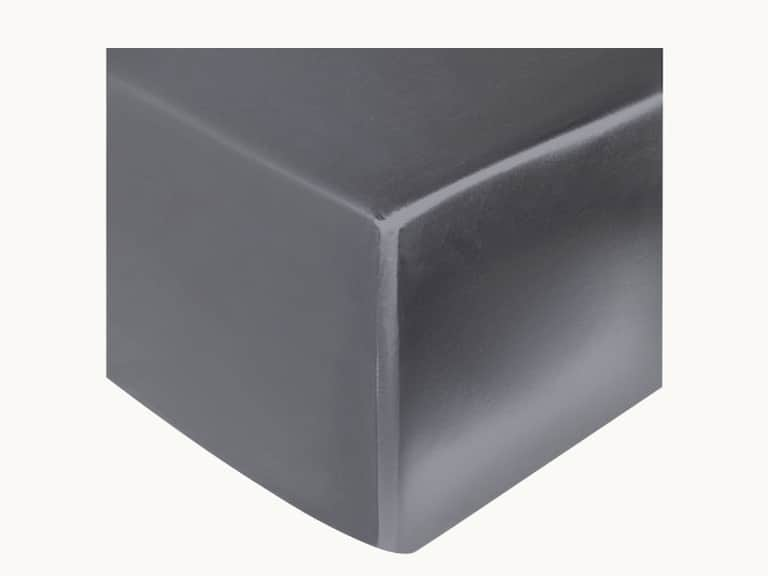
“Fitted” describes a sheet shaped to wrap around a mattress, commonly with elastic at the edges. It does not, by itself, guarantee compatibility with every mattress. Construction details can help you understand how a sheet is intended to stay in place, but dimensions and a real fit check remain essential.
The Naturepedic organic sateen crib sheet is described as having an entire elastic perimeter. That design detail can help explain how the sheet is intended to hold around the mattress edge. It does not mean the sheet will fit every crib mattress, so compare the listed dimensions with the mattress in your home and follow the maker’s instructions.
Be cautious about treating a product feature as a safety certification. Elastic construction, a particular weave, or a snug appearance in a listing is not a substitute for checking the actual fit. Nor should a family add separate fasteners to make an incompatible sheet work. If the product specifications do not clearly cover the mattress, contact the manufacturer for clarification or choose a sheet with confirmed compatibility.
It is also worth reading the complete product listing rather than relying on a short headline. Look for the sheet’s intended use, dimensions, material, washing guidance, and any limitations. If specifications are missing or inconsistent, seek clarification before purchase. Keeping the packaging or product information can make it easier to refer back to care directions later.
3. Compare fiber by feel, function, and facts
Once fit is clear, consider the fabric. Common sheet fibers include cotton, linen, and silk, as well as regenerated cellulosic fibers such as lyocell. They differ in texture, weave, care needs, and how they feel to individual sleepers. For nursery bedding, the useful question is not which material sounds most luxurious; it is whether the specific product is suitable for the intended use and manageable in your home.
Cotton is widely used in bedding and comes in a variety of weaves. Sateen, including organic cotton sateen, describes a weave associated with a smooth surface and a gentle sheen. Percale generally has a crisp, matte feel. Neither weave name, on its own, tells you the complete story about the finished sheet. Fiber content, construction, product quality, and care instructions all matter.
“Organic” refers to how agricultural materials are produced under a particular certification program; it is not a promise that a textile is risk-free, allergy-proof, or automatically better for every household. If a product lists a certification, read the claim carefully and check what standard or organization it refers to. Certification details can help clarify how materials were produced or tested, but they should not be confused with a recommendation about infant sleep setup.
The Naturepedic example is described as a fitted sheet made from GOTS-certified organic cotton sateen. That gives shoppers specific details to investigate: the stated fiber, the weave, and the certification claim. Families who consider certification important can look for the certifier and scope in the product information, then consult the certification organization’s own resources if they want to understand what the label covers.
Silk, linen, and other fabrics may be valued for their distinctive feel, but a material’s general reputation does not establish that a particular item is appropriate for a baby’s sleep space. For a crib, choose bedding expressly intended for that use, verify fit, and follow safe-sleep guidance. Avoid adding loose blankets, decorative pillows, stuffed toys, or other soft objects to the sleep area unless current guidance from a qualified authority specifically says otherwise.
4. Read product claims with a clear head
Words such as “breathable,” “hypoallergenic,” “natural,” and “gentle” are common in bedding descriptions. They may communicate a maker’s intended product qualities, but they are not all the same kind of evidence. A marketing phrase does not diagnose an allergy, prevent irritation, or guarantee a particular health outcome. If your baby has a diagnosed condition or you have a concern about a fabric, ask a pediatric health professional for guidance.
Look for information you can verify: fiber composition, dimensions, construction, care directions, and the name of any certification. If a description makes a broad health or safety claim, check whether it provides meaningful supporting detail. Keep the focus on practical criteria rather than promises that a sheet will improve sleep, protect skin, or solve a medical problem.
For sensitive skin, a family may reasonably prioritize a soft, well-finished fabric and a laundry routine that avoids products known to cause irritation in that household. But there is no single textile that will suit every baby. Pay attention to how the product feels after washing, follow its instructions, and seek professional advice for persistent or concerning skin symptoms.
5. Make the care label part of the decision
A crib sheet will need regular laundering, so care instructions deserve attention before checkout—not after the first spill. Check the recommended water temperature, wash cycle, detergent guidance, drying method, and any warnings about bleach or heat. Then ask yourself a simple question: can your household realistically follow those directions?
The Naturepedic organic sateen crib sheet is described as machine washable and dryer-friendly. That may suit families who prefer a familiar wash-and-dry routine, but always use the instructions on the current product label. Follow the specified settings and avoid substituting a harsher cycle or higher heat simply because another sheet in the laundry can tolerate it.
For fabrics that require more delicate handling, care may involve a gentle cycle, mild detergent, lower temperatures, or air drying. The exact directions vary by product. A sheet’s fiber label alone does not tell you the whole routine, so read the maker’s instructions for that particular item. If a product requires a process you are unlikely to maintain, choose a more practical alternative.
Before laundering, check for stains and follow the product’s instructions for treating them. Avoid unapproved chemical treatments, fabric finishes, or additives. After washing and drying, inspect the sheet for loose threads, damaged elastic, thinning fabric, or other wear. Retire any sheet that no longer fits securely or appears damaged.
- Save or photograph the care instructions for easy reference.
- Use the recommended cycle, temperature, and drying method.
- Choose detergent and laundry products that suit your household and the label.
- Check seams, fabric, and elastic regularly.
- Replace a sheet that is stretched, torn, or no longer fits correctly.
6. Keep the sleep space simple
Nursery décor can be charming, but a crib’s sleep setup should not be treated like a styled bed for adults. Use the mattress and fitted sheet as directed, and follow the latest safe-sleep recommendations from a recognized public health authority in your region. Guidance may vary by country and can be updated, so consult a current source rather than relying on an old checklist or a social media post.
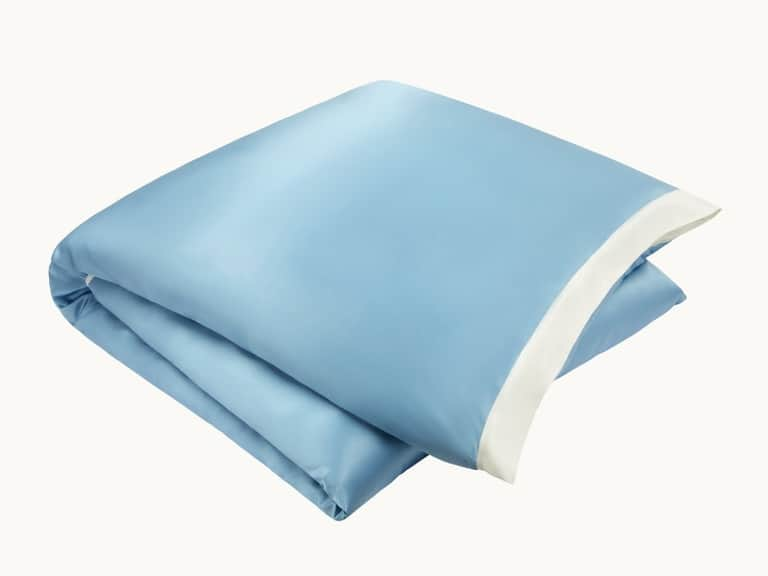
In general, safe-sleep advice emphasizes a firm, flat sleep surface and a clear sleep space. Do not use a sheet as a reason to add extra layers or accessories. A coordinated color scheme, a decorative duvet cover, or a soft blanket may look appealing in a nursery, but decorative bedding is not a substitute for a safe sleep environment. Keep products that are not part of the recommended setup outside the crib.
Also read product notices and check for recalls where you live. A brand name or certification should not be treated as a blanket guarantee. If you are unsure whether an item is intended for infant sleep, how it should be installed, or whether it meets local requirements, ask the manufacturer or a qualified health professional.
A quick nursery bedding checklist
Before buying or using a crib sheet, pause for one final review. These checks are simple, but they help separate a confident choice from one made on appearance alone.
- Match the mattress: Verify mattress dimensions and type against the sheet’s specifications.
- Check the fit: Confirm that the fitted sheet lies flat and stays securely in place, following manufacturer instructions.
- Review the material: Read the fiber content and weave rather than relying only on broad words such as “natural” or “soft.”
- Understand certifications: Identify the named standard and what the certification actually covers.
- Plan for laundry: Make sure you can follow the washing and drying directions as written.
- Inspect after washing: Look for wear, loose threads, stretched elastic, or changes in fit.
- Keep the crib clear: Follow current safe-sleep guidance and avoid adding unneeded bedding or accessories.
- Ask when details are unclear: Contact the manufacturer or a qualified professional rather than guessing.
The bottom line: practical beats picture-perfect
The best nursery bedding choice is not necessarily the one with the most elaborate description or the softest-sounding name. It is a product whose dimensions and intended use you can verify, whose fabric and certifications you understand, and whose care routine fits real life. A fitted sheet with clearly stated dimensions and an elasticized perimeter—such as the Naturepedic organic sateen crib sheet—can be a useful starting point for comparison, provided it matches the mattress and is used according to current guidance.
Put fit first. Then look at fiber, certification details, and laundering. Keep the sleep space simple, check the sheet regularly, and make decisions using up-to-date advice from qualified sources. Those steps are less glamorous than choosing a nursery palette, but they are the details that make a bedding purchase more thoughtful, useful, and easier to live with.