Bedding guide
Inside Gingerlily’s All-Season Comforter: Fill, Shell, and Care
A comforter’s feel comes from more than its name. The filling shapes its warmth and loft, the outer shell influences its touch, and small construction details help everything stay in place. Here’s what to know about Gingerlily’s all-season designs—and how to care for a delicate comforter without guessing.
Published November 23, 2026
“All-season” sounds like a promise of one-and-done bedding: a comforter that can stay on the bed through shifting temperatures and changing weather. In practice, it describes an approach to warmth, not a guarantee that every sleeper will feel equally comfortable in every room. Fill, shell, bedroom temperature, sleepwear, and personal preference all play a part.
Gingerlily’s all-season comforter details offer a useful example of how construction affects the experience. The versions described in the product information share a silk filling, but the shell can differ: one pairs mulberry silk fill with a cotton sateen cover, while another uses a silk shell as well. Corner ties, buttons, and care instructions also matter, especially when the comforter is used with a duvet cover.
Understanding those details makes it easier to choose bedding that suits your routine—and helps you avoid an expensive care mistake. The most reliable rule is simple: follow the instructions attached to the specific comforter you own. Similar-sounding products may have different materials and different cleaning requirements.
What “all-season” means in a comforter
An all-season comforter is intended to provide useful warmth across a range of ordinary indoor conditions. Rather than being designed only for the coldest nights or the warmest months, it aims for a middle ground: enough insulation to feel cozy, without the weight of a deeply filled winter comforter.
That balance is personal. Someone in a cool bedroom may welcome more insulation, while someone who tends to sleep warm may prefer a lighter layer. A home’s heating, climate, mattress coverings, pajamas, and whether the sleeper shares a bed can change how the same comforter feels. “All-season” is a helpful starting point, not a universal temperature setting.
Silk is often chosen for bedding because it is lightweight and breathable. Its natural fibers can contribute to a comfortable feel without creating the dense, heavy sensation some sleepers associate with thicker fills. Still, no filling can independently control the climate of a bedroom. It is best to think of a comforter as one part of a layered sleep setup, with sheets, a duvet cover, and room conditions working together.
The fill: where warmth and loft begin
The fill is the material inside the comforter. It contributes to loft, weight, and insulation, so it is one of the first specifications worth checking. Gingerlily’s all-season comforter information describes a filling of 100% mulberry silk. Another listed construction specifies Grade 6A long-strand mulberry silk fibers, a designation included in that product’s material details.
Silk fill is associated with a light, soft hand and a less bulky profile than some heavily padded alternatives. The goal is not to make a comforter feel weightless in every sense, but to provide a layer of warmth without relying on a dense, rigid construction. How much loft a particular comforter has will depend on its design and the way its fill is arranged.
The phrase “silk-filled” should not be taken to mean that every part of the comforter is silk. A comforter may have silk inside and cotton or silk on the outside. Checking the materials list prevents confusion: the fill and shell are separate components, and each should be considered on its own terms.
Fill construction can also affect how evenly the comforter sits on the bed. In the product information for one all-season model, small ties are described along the sides and at the corners, with buttons intended to help keep the loft even when the comforter is paired with a duvet cover or different insert weights. Those details are practical, not merely decorative: they can help limit shifting when the bed is made or the cover is changed.
The shell: the fabric around the fill
The shell is the outer fabric that encloses the filling. It affects the comforter’s surface feel, appearance, and the way it sits inside a duvet cover. Gingerlily’s all-season descriptions illustrate two different combinations, so it is useful to distinguish them rather than assume all models share identical construction.
One described version uses a 100% cotton sateen shell with a 300 thread count around the silk filling. Cotton sateen has a smooth, soft finish, and it provides a different touch from a silk outer fabric. For a sleeper who wants silk inside but prefers cotton against a duvet cover, this combination may be an appealing balance of materials.
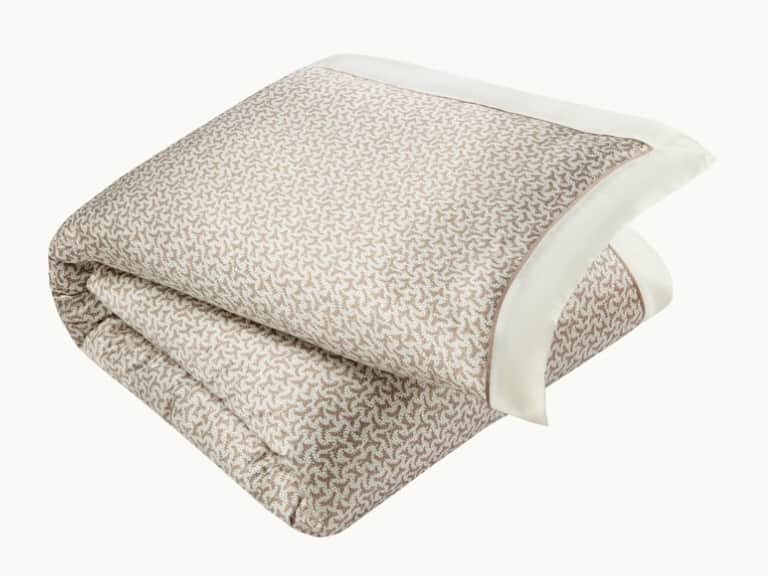
Another described all-season design pairs Grade 6A long-strand mulberry silk fill with a 16 momme charmeuse silk shell. It also has classic piping edging and corner loops. In this construction, both the filling and shell contribute to the silk character of the comforter. A silk shell can have a fluid, smooth hand, while piping gives the edge a defined finish.
Neither shell type is automatically the right choice for everyone. The cotton sateen version offers a cotton exterior around silk fill; the silk-shell version creates a more silk-forward construction. When comparing them, consider the feel you prefer, how the comforter will be covered, and the precise care directions. The outer fabric can influence how a comforter should be handled, even when two products share the same general fill material.
Corner ties, loops, and buttons: small details with a job
A comforter that slides around inside its cover can turn a freshly made bed into a lumpy one by morning. Internal ties and corner loops help connect the comforter to compatible duvet-cover ties, limiting movement at the edges. Buttons or other closures can also help keep an insert arranged as intended, depending on the construction.
Before making the bed, check whether the cover and comforter have matching attachment points. If they do, fasten the ties gently rather than pulling hard on the fabric. A firm tug can place unnecessary stress on seams or loops, particularly on a fine textile. Smooth the comforter into the cover, secure the corners, then shake it lightly to distribute the fill.
These features are particularly useful for a lighter comforter, which may shift more easily than a bulky insert. They do not replace proper sizing: a duvet cover should be compatible with the comforter’s dimensions, and a close match generally helps the bedding look neater and stay aligned.
How to think about year-round comfort
A versatile comforter is easiest to use when the rest of the bed can adapt. A breathable sheet, a removable duvet cover, and an optional blanket give sleepers more control than relying on one thick layer. If a room becomes warm, the cover can be removed or lighter bedding can be used. On colder nights, a separate blanket can add warmth without requiring a different comforter.
Silk bedding is often described as temperature-regulating, but that phrase should be understood as a material characteristic, not a medical or climate-control claim. The room, bedding layers, and sleeper’s own comfort still determine the overall experience. If you wake too warm or too cool, adjust the surrounding layers before assuming the filling alone is responsible.
It can also help to notice how the bed feels over several nights rather than judging from a brief first impression. A new comforter may feel different from a familiar heavy insert, and the duvet cover can change the surface sensation. Season, indoor heating, and the type of sleepwear you use are all part of the picture.
Care begins with the exact product label
Silk is a delicate fiber, but care directions can vary significantly from one comforter to another. The Gingerlily product information includes more than one instruction set. One description says the comforter is designed for year-round use and lists a cotton sateen shell; another says to air the comforter once or twice a year or refresh it with a dryer, while advising against washing and dry cleaning. Those instructions should not be blended into a single rule.
Before cleaning, identify the exact model and read the care label supplied with it. Confirm whether the advice applies to the entire comforter or only a removable cover. Check whether washing, dry cleaning, spot cleaning, airing, or low-heat refreshing is permitted. If the label is missing or unclear, seek guidance from the manufacturer or retailer before using water, heat, or cleaning solvents.
That pause matters. A comforter combines a filling, an outer shell, stitching, and sometimes trims or attachments. A cleaning method suited to one part may be unsuitable for another. Washing can cause delicate fibers to mat or shift; excess heat can affect the shell or construction; and strong detergent may leave residue or stress fine materials. These are reasons to follow the garment-specific directions—not to experiment based on the care routine for sheets or pillowcases.
A gentle routine between cleanings
Regular maintenance does not have to mean frequent washing. If the label permits it, airing a comforter occasionally can help it feel fresh between uses. Choose a clean, dry, well-ventilated setting and avoid prolonged exposure to harsh direct sunlight, which can be hard on delicate fabrics. Follow any specific directions that accompany the comforter, especially if they differ from general textile advice.
A duvet cover is a useful protective layer because it takes much of the everyday contact and can usually be removed for separate laundering. Wash the cover according to its own label; do not assume its care instructions apply to the comforter inside. Before putting the comforter back, make sure both cover and comforter are fully dry, then reconnect any ties or loops without forcing them.
For a small mark, do not automatically soak or scrub the area. First check whether spot cleaning is permitted. If it is, use only the approach specified by the label, and avoid rubbing aggressively. When in doubt, ask a professional cleaner with experience handling delicate bedding. A cautious question is preferable to treating a silk-filled comforter like an ordinary cotton blanket.
Storage and everyday handling
When a comforter is not in use, clean, dry storage helps protect it. Make sure it is completely dry before putting it away, and avoid compressing it tightly for a long period. A breathable storage bag or clean fabric cover can shield it from dust while allowing some air circulation. Plastic storage may trap moisture if the comforter is not fully dry, so follow any manufacturer guidance about packaging.
When making the bed, lift and settle the comforter instead of dragging it across sharp corners or rough surfaces. Keep it away from spills and household products that could stain or damage delicate fabric. These simple habits reduce unnecessary wear and may help preserve the comforter’s shape and finish over time.
A practical checklist before you choose
Product descriptions can feel technical, but a few questions bring the decision into focus. Start with the materials, then consider fit, construction, and care. If you are comparing two Gingerlily all-season comforter descriptions, the shell distinction is especially important: one lists a cotton sateen outer, while another specifies a charmeuse silk shell.
- What is the fill? Confirm the stated fiber and whether the description gives additional information about its construction.
- What is the shell made from? Separate the outer fabric specification from the filling specification.
- How does the comforter attach to its cover? Look for corner ties, loops, buttons, and compatible attachment points.
- Does the size match your duvet cover? Check dimensions and closures before purchasing or making the bed.
- What does the care label allow? Verify the instructions for the exact model rather than relying on a general silk-care rule.
- How warm do you sleep? Consider room temperature and the other layers you already use.
The bottom line
Gingerlily’s all-season comforter descriptions show why the words “silk-filled” are only the beginning of the story. The fill contributes to the comforter’s lightweight character, while the shell—cotton sateen in one described version, charmeuse silk in another—changes the material experience. Ties, loops, and buttons help keep the layers in place, and care requirements depend on the exact construction.
For a calm, reliable bedding routine, compare the fill and shell separately, use a compatible duvet cover, and treat care instructions as model-specific. That approach helps you understand what you are choosing and how to maintain it, without assuming that every all-season comforter can be cleaned in the same way. A little attention to the label can go a long way toward keeping a favorite bedding layer comfortable and in good condition.